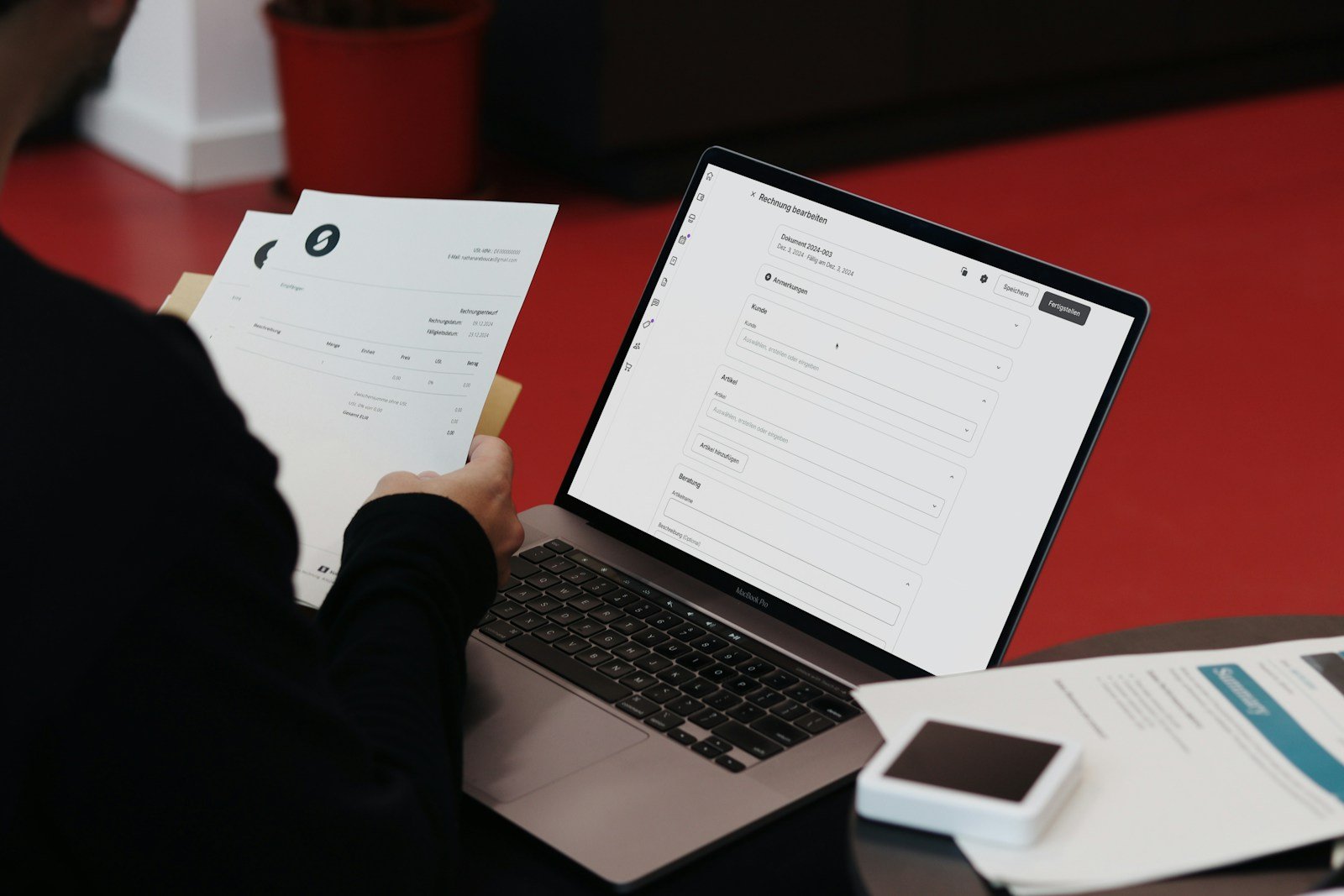
If you invoice with software in Spain, you’ll be hearing a lot about Verifactu over the coming months. The name sounds intimidating, but the idea behind it is simple: invoices issued by a computer program must not be changed or deleted without leaving a trace. In this article we look at what it is, who it affects and what you can prepare calmly in advance.
What Verifactu is
Verifactu is the name given to the set of requirements that the Spanish Tax Agency (AEAT) sets for invoicing software. It comes from Law 11/2021 on preventing and fighting tax fraud, which banned so-called “dual-use software”: programs that let businesses keep one set of books for the tax office and another for themselves.
The details arrived with Royal Decree 1007/2023, which sets out how these programs must work and was later amended to adjust the deadlines. In short, each invoice generates a record that is chained to the previous one, so any later change can be detected.
Two ways to comply
- VERI*FACTU mode: the software automatically sends each invoicing record to the AEAT at the moment the invoice is issued. It’s the simplest option for most people, because many of the technical requirements are covered by the submission itself.
- Non-verifiable mode: the records stay in your own system, but with extra requirements, such as an electronic signature on each record and an event log. The tax office can request them during an inspection.
In both cases, invoices carry a QR code that lets the recipient check them on the AEAT’s website.
Who it affects (and who it doesn’t)
In general, it applies to anyone who issues invoices with software and pays:
- Corporate Income Tax.
- Personal Income Tax (IRPF) on business activities, i.e. the self-employed.
- Non-Resident Income Tax with a permanent establishment in Spain.
It doesn’t apply to those who already keep their books through the Immediate Supply of Information system (SII), to those who pay taxes in the foral territories (the Basque Country and Navarre), which have their own systems such as TicketBAI, or to anyone with a ruling that exempts them.
A common question is what happens if you invoice with Word or Excel. According to the AEAT’s FAQ (in Spanish), if they’re only used to write, print and store invoices, they don’t count as an invoicing system and the rules don’t apply. They do apply if the spreadsheet does more than that: for example, if a macro generates the invoice register. And anyone who invoices by hand, with a paper invoice book, isn’t affected either.
What changes day to day
For the person issuing invoices, the visible change is small: the software adds the QR code and, in VERI*FACTU mode, a note saying the invoice is verifiable. The important part happens behind the scenes:
- An issued invoice can’t simply be edited: corrections are made with corrective invoices or cancellations, which are also recorded.
- Invoice series and numbering must be sequential and consistent.
- The software must come with a responsible declaration from its maker certifying that it complies with the rules.
Timeline
The deadlines have changed more than once since the rules were approved. The latest postponement came with Royal Decree-law 15/2025, and the timeline in force at the time of writing (September 2026) is:
- Corporate Income Tax payers: from 1 January 2027.
- Everyone else who is obliged, including the self-employed: from 1 July 2027.
Since the dates could move again, the reliable reference is always the Spanish Tax Agency’s website.

How to get ready
There’s no need to wait until the last month. A checklist to work through:
- Ask your software provider whether the program is already adapted and whether it offers VERI*FACTU mode.
- If you invoice with Word or Excel, check whether you only type your invoices there or whether the spreadsheet also generates your books: in the second case, the rules do apply to you.
- If you’re looking for a simple program, since October 2025 the AEAT has offered a free VERI*FACTU invoicing app for people who issue few invoices. It has limitations: for example, it can’t produce simplified invoices (receipts).
- Review your invoice series and decide which ones you’ll use from now on.
- Learn how to issue corrective invoices in your software: you’ll need them instead of “editing”.
- If you have an accountant or tax adviser, talk to them: many are already helping clients through this transition.
In short
Verifactu doesn’t change what you invoice or how much tax you pay, only how the software stores your invoices. If you already use up-to-date invoicing software, you’ll barely notice; if you invoice by hand with a spreadsheet, this is a good excuse to tidy up your system. If anything changes, I’ll update this article.